Glacier science · Wildfire attribution
Wildfire, albedo and glacier melt
A 22-year study of wildfire impacts on glaciers across western North America.
Explore the interactive atlas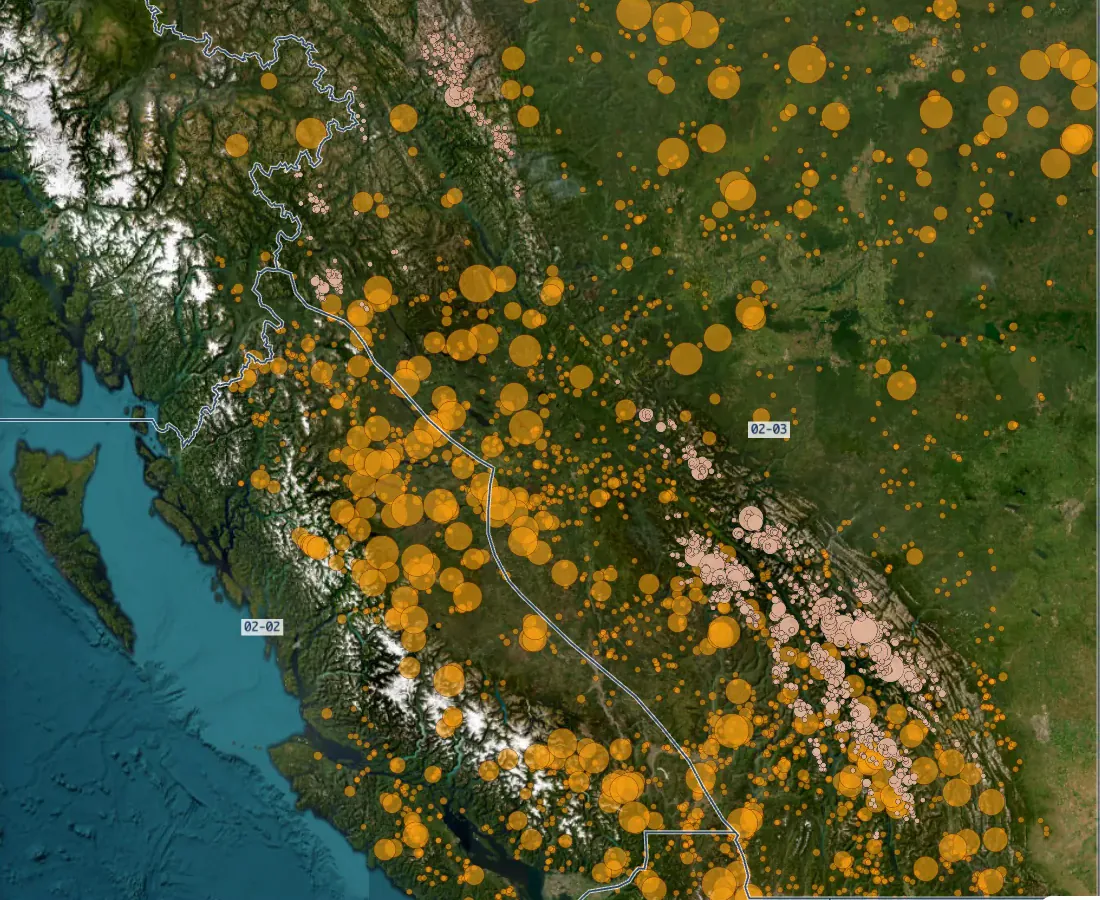
01
Research question
Across western North America, how much of the interannual variability in summer glacier albedo can be attributed to wildfire-derived aerosols, relative to climate and non-fire aerosol sources?
02
Why it matters
Mountain glaciers store and release water on seasonal timescales. When absorbing particles darken snow and ice, the surface reflects less sunlight and absorbs more energy. Wildfire smoke may contribute to this process, but its effect must be separated from temperature, snowfall, rainfall and non-fire aerosols.
This project addresses that attribution problem at regional scale rather than treating fire exposure as a simple proxy for glacier change.
03
Study design
- 17,563
- unique glaciers included in the summary dataset
- 11
- study subregions across western North America
- 2002–2023
- fire-impact analysis period
Annual coverage varies by glacier. These figures describe the analysis scope, not a complete 22-observation record for every glacier.
- Observe: reconstruct seasonal glacier albedo from MODIS satellite data.
- Attribute: compare paired FireWork simulations with and without wildfire emissions.
- Explain: model albedo variability alongside climate and background deposition.
04
Explore the evidence
05
Methods and limitations
The wildfire effect shown in the atlas is modelled, not directly measured. It comes from a counterfactual comparison between simulations with and without wildfire emissions, evaluated within glacier pixels.
Radiative forcing converts the modelled albedo change into additional absorbed shortwave energy. The corresponding melt estimate is an upper bound because it assumes that all additional energy is available for melt.
Read the calculation method06
Data and code
The public atlas combines precomputed glacier summaries with regional geometry, wildfire locations and time-series data. The interface is static and loads detailed records only when a visitor opens a glacier or advanced search.